
The Election is an Event. Investing is a Process.
Market Commentary
The Election is an Event. Investing is a Process.
Data through the 10/14/2026 market close, including September inflation; other figures as of the dates shown.
Bottom Line. As the November 3 midterm elections approach, many investors are asking whether 2022 could repeat. The losses that year came from an inflation shock and 425 basis points of Federal Reserve rate increases; the midterm election was incidental. Today the economy is growing, but inflation rose more than expected in September and interest rates remain elevated; those are the principal risks. Each of our strategies follows its own tested rules, and none of them depends on predicting an election result.
2022 Was an Inflation and Interest Rate Shock
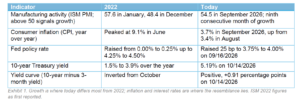
It is natural to remember 2022 alongside that year’s midterm elections. The data point elsewhere. Consumer inflation reached 9.1%, the Fed raised its policy rate from near zero to 4.25% to 4.50%, and stocks and bonds fell together: the S&P 500 returned −18.1% and the Bloomberg U.S. Aggregate Bond Index −13.0%.
Those pressures built through the year and were visible in published economic data before the November 8, 2022 vote. Manufacturing momentum was slowing, inflation remained elevated, and in October the yield curve inverted, a long-standing sign of tightening financial conditions. None of this required a political forecast.
Growth Holds Firm, Though Inflation and Rates Threaten the Outlook
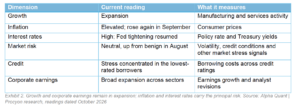
The economy today differs from 2022 where it matters most for corporate earnings. Manufacturing has expanded for nine consecutive months, and new orders rose to 55.3 in September. The main risk today runs through interest rates rather than through weakening demand.
The Fed raised rates again in September. The 10-year Treasury yield rose from 4.19% at the start of 2026 to 5.19% on 10/14/2026, and about 90% of that increase came from higher inflation-adjusted (real) yields. Higherreal yields raise the rate at which investors value future earnings, which can pressure stock and bond prices even while the economy grows.
September’s inflation report, released on 10/14/2026, offers a timely example of why economic fundamentals matter. Consumer prices rose 3.7% over the preceding 12 months, compared with 3.4% in August and expectations of 3.6%. Short-term Treasury yields rose as investors reassessed the outlook for Federal Reserve interest rates, while longer-term yields ended the day slightly lower. Economic activity continues to expand, while persistent inflation and higher borrowing costs create risks for both stocks and bonds. One month of data does not make this another 2022, and it does not by itself change how any of our strategies are positioned.
How Our Strategies Respond
Our economic research provides one consistent view of the investment environment. Each strategy then follows its own investment rules: some can move from stocks to cash, while others stay fully invested and respond by changing what they own. No strategy changes its positioning because of an election result.
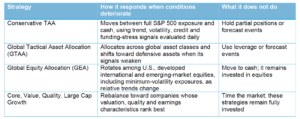
Exhibit 3. Conservative TAA can move fully out of stocks and GTAA can shift toward defensive assets; the others respond by changing what they own.
What Would Change Our Assessment
Each of these developments is observable and measured within our research.
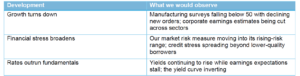
These are the channels through which any election outcome would reach portfolios: fiscal policy, inflation, interest rates and credit. If the election moves them, our models will register it.
Discipline is the Advantage You Can Keep
A note from Massimo Santicchia, Head of US Equities
Since I began managing money in 2000, I have watched investors freeze ahead of elections, wars, Fed meetings and calendar rules such as “sell in May.” The instinct is understandable. Each event is uncertain, and waiting feels like a way to avoid the risk.
It rarely is. The investors who compound wealth over decades follow a consistent, evidence-based process through the events they cannot control. Our strategies have been managed live for 16 years, through expansions and recessions, a pandemic, an inflation shock, and a full cycle of Fed tightening and easing.
We cannot know who will win on November 3. We know which economic conditions matter for investment risk, and each strategy follows defined rules for responding to its own investment signals.
IMPORTANT DISCLAIMERS AND DISCLOSURES:
Sources: Institute for Supply Management, Manufacturing Report on Business (September 2026); U.S. Bureau of Labor Statistics, CPI for September 2026 (released 10/14/2026); Federal Reserve, FOMC statement (09/16/2026); U.S. Department of the Treasury, daily par nominal and real yield curves (01/02/2026 and 10/14/2026); S&P Dow Jones Indices; Bloomberg; Alpha Quant | Procyon Partners research.
Important disclosures: Procyon Advisors, LLC is a registered investment advisor with the U.S. Securities and Exchange Commission (“SEC”). Information in this message is for the intended recipient[s] only. Please visit our website www.procyon.net for important disclosures.
This material is for informational purposes only and is not a recommendation to buy or sell any security or to adopt any investment strategy. Investing involves risk, including possible loss of principal. Past performance is not indicative of future results. Indices are unmanaged, do not reflect fees, and cannot be invested in directly. Economic and market indicators do not guarantee investment outcomes. Strategy descriptions are summaries; exposures vary by strategy, mandate and client circumstances. Views are as of the date shown and subject to change. Please speak with your financial advisor about your individual situation.