Welcome, Elite Retirement Consultants, LLC & Dispenziere & Associates LLC, Clients. We are honored to have you join the Procyon community!


Procyon Tag

Annuity income eases retirement anxiety and market fear, advisors say


Senior Vice President & Private Wealth Advisor Jesse VanValin, AIF® told InvestmentNews how he tackles annuity income and retirement anxiety. He backs out the investment values and puts a number on the desired income. Then he calculates how much of it Social Security or a pension already covers.

S&P 500 snaps 3-day losing streak as extraordinary Treasury action provides some rate relief


Massimo Santicchia, our Head of U.S. Equities, told CNBC that strong earnings and higher yields are creating market tension. Stocks are performing well this week thanks to a strong second quarter earnings season. He said, “Value names, for example, are doing really well today.” “That tells you that the economy and the corporate earnings cycle are still very strong.”

A Better Economy, A Tougher Discount Rate


Something genuinely encouraging happened in the economy this month, and something less encouraging happened in the bond market. Both matter, and they point in opposite directions.

The good news first. Manufacturing activity accelerated to its strongest reading in more than four years, and the strength was broad rather than narrow: new orders, production, order backlogs, and hiring all improved, with fifteen of eighteen industries expanding. At the same time, inflation cooled for a third consecutive month, easing from 4.1% in May to 3.3% in June and 2.9% in July. Growth accelerating while inflation decelerates is the most favorable combination the economy produces, and it moved the business cycle out of the overheating phase it occupied in July.

The complication is borrowing costs. In a textbook version of this transition, slower inflation brings interest rates down with it. That is not what happened. The ten-year Treasury yield rose to 4.75%, and because inflation fell at the same time, the inflation-adjusted cost of borrowing jumped from roughly 0.3% to 1.9% in a single month. The economy improved. But the price investors are being asked to pay for future growth became more demanding.

That combination shapes everything below. The expansion is intact and worth participating in. What has changed is how much room there is for error if something disappoints.


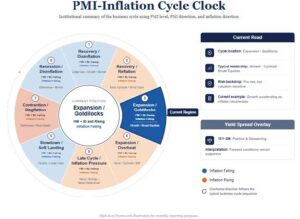
The cycle clock moved from Expansion / Overheat in July to Expansion / Goldilocks in August.

Goldilocks describes the growth-and-inflation mix; it does not mean financial conditions are


What the Market Environment Favors


The backdrop still supports owning equities. It favors a different balance within them than it did three months ago, when growth was strong but inflation was still climbing.

Steadier companies over the most volatile ones: When the cost of capital rises, the market becomes less forgiving of companies whose value depends heavily on profits far in the future. Businesses with more stable earnings and less dramatic price swings tend to hold up better in that environment, without requiring an investor to leave the market.

Reasonably priced companies across all sizes: Value stocks do not require rising inflation to perform. When real interest rates are higher, investors tend to place a greater premium on businesses generating profits today rather than on companies whose valuations depend heavily on earnings far in the future. Spreading that across large, medium, and small companies avoids depending on any single slice of the market.

Energy and defensive sectors together: Energy participates in firm economic activity. Together with consumer staples and utilities, they create a balance between participation in firm economic activity and some resilience if the expansion becomes choppier or rates stay high.

International quality, with more selective emerging market exposure: Developed international markets, particularly higher-quality companies, continue to merit real weight. The model continues to retain broad emerging-market exposure, while becoming more selective at the individual-country level.


What Changed This Month


The most useful thing to understand is what did not change. Overall equity exposure is unchanged, and the US allocation remained at 59.5%. There was no move to cash and no reduction in stock-market participation.

What changed is composition. Within US holdings, the emphasis moved toward lower-volatility companies and toward reasonably priced companies across large, medium, and small sizes. Within international holdings, roughly four and a half percentage points moved from emerging markets toward developed international markets, though broad emerging market exposure itself was left alone. Energy, consumer staples, and utilities all carried over unchanged.

The distinction worth holding onto is this: this month adjusted where risk sits, not how much of it there is. That is a meaningfully different decision from turning cautious, and it reflects an environment where the economy is improving while the price of money is rising.


The Backdrop Behind the Market


The Economic Backdrop

Manufacturing activity rose to 55.6, its highest level since May 2022. Fifteen of eighteen industries expanded, and manufacturing employment moved above the expansion line for the first time in thirty-three months. The strength is broad rather than concentrated in one or two industries.

Inflation moved the other way, easing for a third consecutive month to 2.9%. Growth above the expansion line and rising, combined with inflation falling, is the Goldilocks quadrant of the cycle clock rather than the overheating quadrant the economy occupied in July.

One caveat belongs here. The prices manufacturers pay for their raw materials remain elevated at 71.1, well above the level that signals rising costs. Consumer inflation has cooled, but cost pressure has not disappeared from the production pipeline. This is disinflation at the headline level rather than a fully resolved inflation problem.

Corporate Earnings Remain a Pillar

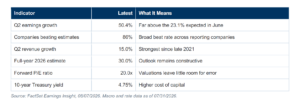
Profits are the strongest single support for equities right now. With 88% of the S&P 500 having reported, 86% beat earnings expectations and 76% beat on revenue. Blended earnings growth reached 50.4% against the 23.1% analysts expected at the end of June, and revenue growth of 15.0% is the strongest since late 2021. All eleven sectors saw estimates revised upward.


There is an important qualification. A meaningful share of the headline growth comes from a small number of very large technology companies; excluding Alphabet and Amazon reduces both the size of the surprise and the growth rate, though what remains is still strong. The profit cycle is real, but it is not evenly distributed.

Market Conditions Remain Supportive

The risk environment is calm. Equity volatility is low with the VIX near 15, corporate borrowing costs are tight relative to government bonds, and dollar liquidity has moved from neutral to easing. These are not the conditions that precede market stress, and market internals confirm it: economically sensitive sectors are outperforming defensive ones in the United States, developed international markets, and emerging markets alike. US cyclical leadership strengthened dramatically, from a negligible advantage in July to nearly fifteen percentage points over six months.

One thing did deteriorate, and it is worth understanding because it is not obvious. Stocks and bonds have started moving together far more than they were: the relationship between them rose from essentially zero to 0.55 over the past month. In practical terms, that means bonds are providing considerably less protection than usual when stocks fall. A jump in interest rates would now likely pressure both at once, which reduces one of the traditional diversification benefits of a balanced stock-and-bond portfolio.


What Could Derail This Setup


The environment is constructive, but the risks have shifted in an important way. Three months ago the main worry was that inflation would keep climbing and force the economy into a downturn. That is no longer the primary concern.

The primary risk scenario: interest rates rising further from here. With stocks trading at 20 times expected earnings and the inflation-adjusted cost of borrowing already up sharply, higher yields would compress valuations directly, and the weakened relationship between stocks and bonds means there would be less cushion than usual. This is a valuation and cost-of-capital risk rather than a recession risk.

Specific warning signs to monitor:

➔ Ten-year Treasury yields moving meaningfully above current levels, pressuring valuations

➔ Inflation reaccelerating, particularly if elevated production costs start feeding into consumer prices

➔ Manufacturing activity rolling over, which would undercut the expansion thesis

➔ Corporate borrowing costs widening, the clearest early sign that calm conditions are breaking

➔ Stocks and bonds moving together even more closely, further reducing the value of diversification

➔ Defensive sectors beginning to outperform economically sensitive ones

➔ Earnings growth narrowing further into a handful of very large companies

There is also a subtler risk in how thoroughly the market has already recognized the good news. Cyclical sectors lead in every major region, credit conditions are tight, and volatility is low. Most of the positive story is now reflected in prices as well as in analyst estimates, which means the market increasingly needs companies to deliver results rather than simply to raise expectations.


The Bottom Line


The economy improved this month in a way that genuinely matters. Growth accelerated and broadened, inflation cooled for a third consecutive month, corporate profits came in far ahead of expectations, and credit markets show no sign of stress. The business cycle moved into its most favorable configuration.

What did not improve is the cost of money. Interest rates rose even as inflation fell, valuations remain demanding at 20 times forward earnings, and bonds are providing less protection than they normally would. The economy got better; the terms on which that economy is priced got tougher.

That combination helps explain why the model’s composition changed without reducing overall equity exposure. The external environment still supports equity participation, while higher real yields, demanding valuations, and weaker stock-bond diversification make the model’s emphasis on steadier companies, explicit value, and international quality economically coherent.

The expansion is not in question. The margin of safety around it is. Interest rates, inflation direction, credit conditions, and the breadth of earnings growth are therefore the key indicators to watch in the months ahead.


IMPORTANT DISCLAIMERS AND DISCLOSURES:

The information contained in this presentation has been gathered from sources we believe to be reliable, but we do not guarantee the accuracy or completeness of such information, and we assume no liability for damages resulting from or arising out of the use of such information. Past performance is not indicative of future results.

The views expressed in the referenced materials are subject to change based on market and other conditions. This document may contain certain statements that may be deemed forward-looking statements. Please note that any such statements are not guarantees of any future performance and actual results or developments may differ materially from those projected. Any projections, market outlooks, or estimates are based upon certain assumptions and should not be construed as indicative of actual events that will occur. The information provided herein does not constitute investment advice and is not a solicitation to buy or sell securities.

Different types of investments involve varying degrees of risk, and there can be no assurance that the future performance of any specific investment, investment strategy, investment model, or products, including the investments, investment strategies or investment themes referenced herein, will be profitable, equal any corresponding indicated historical performance level(s), be suitable for a particular portfolio or individual situation, or prove successful. Due to various factors, including changing market conditions and/or applicable laws, the content may no longer be reflective of current opinions or positions.

Please note that nothing in this content should be construed as an offer to sell or the solicitation of an offer to purchase an interest in any security or separate account. Nothing is intended to be, and you should not consider anything to be direct investment, accounting, tax, or legal advice to any one investor. Consult with an accountant or attorney regarding individual accounting, tax, or legal advice. No advice may be rendered unless a client service agreement is in place.

Procyon Advisors, LLC is a registered investment advisor with the U.S. Securities and Exchange Commission (“SEC”). This report is provided for informational purposes only and for the intended recipient[s] only. This report is derived from numerous sources, which are believed to be reliable, but not audited by Procyon for accuracy. This report may also include opinions and forward-looking statements which may not come to pass. Information is at a point in time and subject to change.

For additional information, please visit our website at www.procyon.net.

Building Family Office Capabilities for the Middle Market


Wealth Management featured our co-founder and CEO Phil Fiore, Jr., CIMA® in its 2026 Midyear Outlook. He contributed an article on how advisors can build a family office for the middle market. It discusses what advisors need to close the service gap for this underserved group of clients.

Empty nest, full opportunity: how advisors turn a life change into a plan


Gregg Greenberg

InvestmentNews featured Private Wealth Advisor Caroline Wetzel, CFP®, MBA, AWMA®, in an article on empty nest financial planning. She explains how life transitions like an empty nest create uncertainty. They also create opportunity for clients to reimagine their financial journey.

A Higher Standard for Financial Advice


A fiduciary is someone who has a legal obligation to act in another person’s best interest. In financial advice, that obligation shapes how recommendations are made, how challenges are handled, and how client relationships are maintained. A fiduciary financial advisor prioritizes your financial goals, manages conflicts of interest, and delivers guidance with transparency and care.

This distinction matters because not all financial professionals operate under the same standard. When decisions involve retirement, taxes, estate planning, and long-term wealth, the structure behind the advice can be just as important as the advice itself.

Understanding how the fiduciary standard works and how it shapes the advisory relationship can help you make more informed decisions about your financial future. It’s also a key reason why fiduciary-focused firms, such as Procyon, frame wealth management as a comprehensive, long-term partnership.


Who May Benefit From Working With a Fiduciary Financial Advisor?


Many individuals and families can benefit from working with a fiduciary financial advisor, especially those with more complex financial needs, including:

► Families managing multi-generational wealth

► Executives with equity compensation

► Business owners planning for growth or succession

► Individuals approaching retirement

► Anyone seeking coordinated financial planning

For those seeking a more integrated approach, private client wealth management can provide a framework that brings together investments, tax strategies, and long-term financial planning.


What Does Fiduciary Mean In Financial Planning?


A fiduciary financial advisor can provide financial planning, investment advice, and wealth management services while being legally bound to act in the client’s best interest. They must act with loyalty, care, and good faith when providing financial guidance, which means prioritizing the client’s financial interests at all times. Unlike the broader “Broker” title, an “Advisor’s” fiduciary status reflects how advice is delivered, not just what services are offered.

Fiduciary duty generally includes:

► Duty of care: Advice must be based on a thoughtful understanding of your financial situation, goals, and risk tolerance

► Duty of loyalty: The client’s interests must continuously come first, and conflicts of interest must be avoided or mitigated and clearly disclosed 

► Good faith: Advisors must act honestly and transparently in every interaction

This standard requires advisors to make full and fair disclosure of all material facts, including conflicts of interest, so clients can make informed decisions.

Investment Advisor vs. Registered Representative: Key Differences

Not all financial representatives are fiduciaries. The terms “Financial Professional,” “Financial Consultant,” and “Stockbroker” can encompass individuals who operate under different regulatory standards and governing laws.


Investment Advisor Registered Representative
Affiliated with Registered Investment Adviser (RIA) firm


Investment advice, portfolio management, financial planning


Required to continuously act in your best interest

Affiliated with Broker-Dealer (BD) firm


Securities transactions and product sales


Suitable or in your best interest at the time of making recommendations

Ongoing investment oversight aligned with your financial goals and objectives No ongoing oversight


Compensation Can Influence Advice

In addition, compensation models vary, which is why transparency and disclosure are important:

► Fee-only advisory fees (RIA)

► Brokerage commission-based product compensation (BD)

► Hybrid structures (RIA and BD)


What Does A Fiduciary Financial Advisor Do?


Fiduciary advisors often support:

► Investment and Wealth Management

► Retirement and Tax Planning

► Education Funding

► Charitable Giving

► Estate and Legacy Planning

► Strategies for Savings

The difference is not in the label; it’s in the obligation. A fiduciary financial advisor must align every recommendation with your financial goals, rather than external incentives or product-driven compensation. The fiduciary standard emphasizes an ongoing relationship built on trust, alignment, and accountability, especially important as financial needs evolve over time.


What Does Fiduciary Duty Require From A Financial Advisor?


The fiduciary duty financial advisor standard establishes clear expectations for how advice is delivered. Financial decisions rarely exist in isolation. Investment decisions often connect to taxes, estate planning, and long-term financial security.

A Deep Understanding of Your Financial Life

Fiduciary advisors must base recommendations on a comprehensive understanding of:

► Financial goals and objectives

► Investment experience and risk tolerance

► Liquidity needs and time horizon

► Income, assets, and liabilities

Managing and Disclosing Conflicts

They are required to:

► Avoid conflicts where possible

► Clearly disclose any unavoidable conflicts

► Ensure clients understand how those conflicts may affect recommendations

Ongoing Advice and Accountability

Fiduciary duty continues throughout the relationship. That includes:

► Monitoring and adjusting strategies over time

► Communicating proactively

► Adapting to life changes and market conditions

A More Integrated Approach to Planning

A fiduciary framework supports:

► Long-term decision-making

► Alignment across multiple financial areas

► Advice that reflects your full financial picture

Clarity, Transparency, and Trust

The fiduciary standard helps reduce conflicts and improve transparency. While no model eliminates all potential conflicts, fiduciary advisors are required to address them openly and in the client’s best interest.


How to Tell Whether a Financial Professional is a Fiduciary


Understanding what fiduciary means is one step, and verifying it in practice is another. These steps can help clarify how a financial professional operates and what standards they follow.

Questions to Ask

1. Will you act as a fiduciary at all times when providing advice?

2. How are you compensated (fees, commissions, or both)?

3. Do you provide personalized advice based on my full financial situation?

4. How do you handle conflicts of interest?

Steps to Being an Informed Investor

1. Review Disclosure Brochure provided by financial professional

2. Verify registration through adviserinfo.sec.gov or brokercheck.finra.org

3. Use the SEC’s Investor.gov site for additional information


A Complete Approach to Fiduciary Wealth Management


Schedule a Complimentary Consultation With A Procyon Financial Advisor Today

Choosing a financial advisor is about more than desiring a fiduciary; it’s about working with a partner who guides you through all aspects of your financial life. Procyon’s 100% independent fiduciary approach is designed to provide clarity, alignment, and confidence across every decision, from investments to taxes, estate planning, and beyond.

The result is a more integrated strategy that reflects your goals, adapts over time, and supports your broader financial picture. Connect with the Procyon team to explore your financial priorities and take the next step toward a more coordinated, thoughtful strategy.

Schedule a complimentary consultation with our team of financial advisors today.


FAQs About Fiduciary Financial Advisors and Client Relationships


Is a fiduciary financial advisor required by law to act in my best interest at all times?

Yes! A fiduciary financial advisor is required to act in your best interest when providing advisory services. However, the applicable standard (fiduciary, suitability, best-interest) can depend on the role they are serving in at a given time. It’s important to confirm whether your financial professional will act as a fiduciary at all times (RIA) or will only act in your best interest when making recommendations (BD).

How do fiduciary financial advisors get paid?

Financial advisors are commonly paid fees based on a percentage of assets under management or flat financial planning fees. Some may also receive other forms of compensation, but they are required to disclose how they are paid and ensure compensation does not override your best interest.

Can a financial advisor switch between fiduciary and non-fiduciary roles?

Yes, some financial professionals have the ability to operate under a hybrid model, acting as a fiduciary in one context (RIA) and not in another (BD). This is why it’s important to ask how the advisor operates across all services and whether fiduciary duty applies consistently.

What credentials should a fiduciary financial advisor have?

A “financial advisor” can work for a broker-dealer (BD) or insurance agency, but they cannot falsely claim they are registered as an “Investment Adviser Representative” (IAR) if they are not. IARs are associated with a Registered Investment Advisor (RIA) firm and serve clients in a fiduciary capacity. Designations like CFP® (Certified Financial Planner™) often require fiduciary responsibility when providing advice. More important than credentials are how the advisor is registered and whether they are legally held to a fiduciary standard.

Are Registered Investment Adviser (RIA) firms always fiduciaries?

Yes, registered investment adviser (RIAs) firms are required to act as fiduciaries under federal and state regulations. This means their IARs, also fiduciaries, must provide advice aligned with the client’s interests, disclose conflicts, and follow a duty of care and loyalty within the advisory relationship.

What questions should I ask before hiring a fiduciary financial advisor?

Start by asking whether they act as a fiduciary at all times, how they are compensated, how they manage conflicts of interest, and whether they provide comprehensive financial planning. These questions help clarify how advice is delivered—not just what services are offered.

Does working with a fiduciary financial advisor guarantee better results?

No. A fiduciary standard does not guarantee investment performance or financial outcomes. However, it helps align advice with your financial interests, supporting more consistent, transparent, and goal-focused decision-making over time.

Is a fiduciary financial advisor better for long-term financial planning?

In many cases, yes. A fiduciary financial advisor is typically better suited to long-term planning because the relationship emphasizes ongoing advice, alignment with your goals, and coordination across areas such as investments, taxes, and estate planning.


Selective Strength, Steady Conviction


The reflationary backdrop that favored value, cyclicals, and emerging markets earlier this year remains intact. Growth is expanding, inflation is firm, risk appetite is healthy, and the yield curve is positive and steepening. These are the conditions that have historically rewarded economically sensitive positioning.

What has changed is how the opportunity is being expressed. The broad regional posture has not shifted: the allocation remains overweight US equities, with meaningful developed international and emerging market exposure. But inside the portfolio, the emphasis has become more selective. International exposure now favors quality over momentum. US sector exposure has rotated from growth-oriented cyclicals into energy and more defensive sectors. And within emerging markets, the country mix has shifted toward Latin America.

This is not a retreat from the reflationary thesis. It is a refinement of it. The data still supports a pro-cyclical stance, but conditions are more mature than they were two months ago. Markets have priced much of the good news, and the model is responding with greater selectivity rather than broader risk-taking.


What the Market Environment Favors


The current backdrop continues to favor a pro-cyclical orientation, but one that balances conviction with discipline. That means tilting toward:

‣Value over Growth: Value stocks remain the strongest factor signal. Firm inflation and broadening economic growth continue to support companies trading at attractive valuations relative to their fundamentals, across both US and international markets.

‣Energy and Selective Defensives: Energy remains a natural fit for a reflationary environment. The addition of defensive sectors such as Consumer Staples and Utilities reflects a more balanced posture rather than a loss of conviction in the cycle.

‣International Exposure with a Quality Tilt: Developed international and emerging market equities continue to merit meaningful weight. The shift is in emphasis: international exposure now favors quality-oriented companies over pure momentum, a choice consistent with a more mature phase of the expansion.

‣Emerging Markets, Tilted Toward Latin America: Total emerging market exposure is unchanged, but the country mix now emphasizes Brazil and Latin America. These markets carry strong economic linkages to the global reflationary theme.


What Changed This Month


The most important message is what did not change. The broad regional split across US, developed international, and emerging market equities is the same as last month. Total emerging market exposure is unchanged. The model has not stepped back from global equity participation.

The changes were internal, and they matter. International equity exposure rotated from a momentum-oriented strategy to a quality-oriented one. US sector exposure shifted from Technology, Industrials, and Consumer Discretionary into Energy, Consumer Staples, and Utilities. And within emerging markets, South Korea was replaced by Brazil.

Read together, the signal is clear: the model is maintaining its reflationary allocation but expressing it with more balance. Risk is being taken in different places, not in different amounts.


Why This Positioning Makes Sense


The Economic Backdrop

Growth momentum remains positive. Manufacturing activity sits above 50 and is still rising, with a weighted PMI of 53.9 and services activity at 54.0. Inflation is firming at roughly 4.1% year-over-year, and the yield curve maintains a positive, steepening slope. These are the conditions that historically support risk-taking in equities and favor value, cyclicals, and emerging markets.

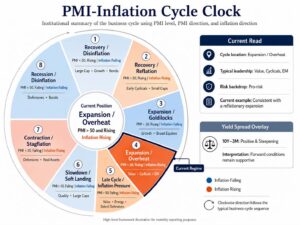
The macro regime remains classified as Expansion / Overheat on the cycle clock. That is constructive territory, though it is also a regime where valuation and rate sensitivity carry more weight.

Corporate Earnings Are Strong

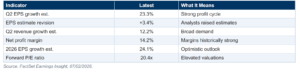
Earnings continue to be a primary support for equity risk appetite. Estimated year-over-year S&P 500 earnings growth for the second quarter stands at 23.3%, which would mark the second consecutive quarter above 20%. Revenue growth is estimated at 12.2%, and net margins remain historically strong at 14.2%.

Ten of eleven sectors are expected to report year-over-year earnings growth, led by Energy, Information Technology, and Materials. The caveat is concentration and valuation: much of the improvement remains concentrated in a handful of sectors, and forward multiples leave less room for disappointment.

Market Conditions Support Measured Risk-Taking

The risk environment remains supportive. Equity volatility is contained with the VIX at 16, credit spreads are tight, and the overall risk composite reads as risk-on. These are not conditions associated with defensive stress.

The most constructive signal comes from market internals: emerging market cyclicals are outperforming their defensive counterparts by a wide margin, and the same pattern holds in developed international markets. US cyclical leadership, however, has faded to near-flat. That divergence is part of what is driving the more balanced posture.

The US dollar is neutral rather than weakening, which means liquidity support for international equities is less powerful than earlier in the year. The model has responded accordingly: it retains international and emerging market exposure but expresses it through quality and commodity-linked markets rather than broad momentum.


What Could Derail This Setup


The positioning is compelling, but it is not without risk. A pro-cyclical stance built around value, energy, and emerging markets creates vulnerability if the conditions supporting those areas reverse.

The primary risk scenario: a further acceleration in inflation that drives bond yields sharply higher and strengthens the US dollar. This combination would pressure emerging markets, cyclicals, and international equities disproportionately.

Specific warning signs to monitor:

‣US dollar breaking higher, creating headwinds for international and emerging market equities
‣10-year Treasury yields spiking above current levels, challenging valuations and yield-sensitive sectors
‣High-yield credit spreads widening, signaling deteriorating risk appetite
‣Manufacturing PMI rolling over, weakening the growth thesis
‣Defensive stocks beginning to outperform cyclicals, signaling a shift in market sentiment
‣Emerging markets losing relative strength versus developed markets
‣Earnings revision breadth narrowing further, reducing bottom-up confirmation

Any combination of deteriorating growth, tightening liquidity, rising yields, widening credit spreads, or renewed dollar strength would hit cyclical positioning hard. These are not distant theoretical risks; they are the specific conditions that would invalidate the current opportunity. Monitoring them remains essential.


The Bottom Line


The reflationary backdrop remains in place, and the data continues to favor value, cyclicals, and emerging markets. Growth is expanding, earnings are strong, risk appetite is healthy, and markets are still rewarding economically sensitive positioning.

What has changed is the degree of selectivity. Markets have priced much of the reflationary expansion, and the allocation has responded by shifting from broad momentum toward quality, energy, and defensive balance. The regional risk allocation is unchanged, but the internal composition is more disciplined.

The core task remains the same: watching the macro drivers that justify the stance. If growth momentum fades, if credit conditions tighten, if the dollar reverses higher, the positioning needs to shift with it. For now, the opportunity remains compelling, and the conditions are in place to capture it.


IMPORTANT DISCLAIMERS AND DISCLOSURES:

The information contained in this presentation has been gathered from sources we believe to be reliable, but we do not guarantee the accuracy or completeness of such information, and we assume no liability for damages resulting from or arising out of the use of such information. Past performance is not indicative of future results.

The views expressed in the referenced materials are subject to change based on market and other conditions. This document may contain certain statements that may be deemed forward-looking statements. Please note that any such statements are not guarantees of any future performance and actual results or developments may differ materially from those projected. Any projections, market outlooks, or estimates are based upon certain assumptions and should not be construed as indicative of actual events that will occur. The information provided herein does not constitute investment advice and is not a solicitation to buy or sell securities.

Different types of investments involve varying degrees of risk, and there can be no assurance that the future performance of any specific investment, investment strategy, investment model, or products, including the investments, investment strategies or investment themes referenced herein, will be profitable, equal any corresponding indicated historical performance level(s), be suitable for a particular portfolio or individual situation, or prove successful. Due to various factors, including changing market conditions and/or applicable laws, the content may no longer be reflective of current opinions or positions.

Please note that nothing in this content should be construed as an offer to sell or the solicitation of an offer to purchase an interest in any security or separate account. Nothing is intended to be, and you should not consider anything to be direct investment, accounting, tax, or legal advice to any one investor. Consult with an accountant or attorney regarding individual accounting, tax, or legal advice. No advice may be rendered unless a client service agreement is in place.

Procyon Advisors, LLC is a registered investment advisor with the U.S. Securities and Exchange Commission (“SEC”). This report is provided for informational purposes only and for the intended recipient[s] only. This report is derived from numerous sources, which are believed to be reliable, but not audited by Procyon for accuracy. This report may also include opinions and forward-looking statements which may not come to pass. Information is at a point in time and subject to change.

For additional information, please visit our website at www.procyon.net.

What is Estate Tax?

If you live in Texas and are considering estate planning, it’s important to understand the complexities of the tax landscape. While Texas does not impose an estate tax, federal estate tax laws may still affect your wealth transfer.

Estate and inheritance taxes are commonly misunderstood, but they are each distinct forms of taxation. Estate tax is imposed on the total value of a deceased person’s estate before the assets are distributed to heirs. In contrast, inheritance tax is paid by beneficiaries on what they receive from the estate. While Texas residents do not pay a state estate tax, understanding these distinctions is crucial for effective estate tax planning.1

Estate taxes are levied on the value of an individual’s estate at death. These taxes are assessed on the estate itself, and payment is typically due before distribution to heirs. The estate tax liability depends on the estate’s value and applicable exemptions. Inheritance taxes, meanwhile, are paid by the beneficiaries rather than the estate. Knowing how these taxes differ may help Texas residents plan their estate more effectively and minimize the potential for unexpected tax liabilities.

Texas Estate Laws and Advantages

As mentioned previously, Texas does not have an estate tax, commonly referred to as a “death tax.” In fact, Texas is one of several states without a state-specific estate tax, in line with its general tax philosophy – to keep overall tax burdens low for its residents. This absence is part of Texas’ commitment to creating a business-friendly environment without additional state estate taxes.2 Many people choose to relocate to Texas partly because of its favorable tax policies, which can help preserve family wealth over generations.3

Federal Estate Tax – What TX Residents Need to Know

Despite this, Texas residents may still be subject to federal estate tax regulations. The federal estate tax exemption for 2026 is $15 million per individual.4 Estates valued below this threshold are not subject to federal estate tax, while those exceeding it must pay a federal tax rate that can reach up to 40%. The Tax Cuts and Jobs Act (TCJA) increased the exemption significantly, but without further action from Congress, this exemption is set to decrease in 2026. Proactive estate planning is essential for those with significant assets to ensure that their heirs do not face hefty federal estate taxes.

It is also important for Texas residents to understand the potential impact of future federal estate tax changes. The TCJA’s generous exemption levels are not guaranteed to continue indefinitely. For wealthy individuals and families, this could mean a much larger portion of their estate would become taxable at the federal level if these exemptions levels were to be reduced. These federal changes may affect the tax treatment of an estate, because of this, estate tax planning should include proactive consideration for these amendments.

Inheritance Tax Considerations

Furthermore, Texas also does not impose an inheritance tax. However, if a resident inherits estate assets in a state that does have inheritance taxes, they may still be required to pay taxes to that state. It’s essential to consider these specific scenarios and examples when planning your estate in order to help minimize unexpected tax liabilities. Another element to consider is if a Texas resident inherits property from a relative in a state that does impose inheritance taxes, the beneficiary may have to pay that tax, even though Texas itself does not have one. This can further complicate estate planning, especially if beneficiaries are spread across multiple states. As of now the only states that impose an inheritance tax are Iowa which is scheduled for phase out by 2025, Kentucky, Maryland, Nebraska, New Jersey and Pennsylvania. For this, and for many other reasons, you can be thankful you live in the great state of Texas.

Strategies to Minimize Estate Taxes

Minimizing estate and inheritance tax burdens requires proactive planning. Strategies such as making use of the annual gift tax exclusion ($19,000 per recipient in 2026), setting up irrevocable trusts, and charitable giving can reduce an estate’s taxable value.5, 6 By gifting assets during your lifetime, you can reduce the estate’s overall size and potentially lower or eliminate its estate tax liability. Married couples can also benefit from strategic planning to fully utilize both spouses’ federal estate tax exemptions, effectively doubling the exemption amount available to their heirs. Trusts can also be a powerful tool for minimizing estate taxes and protecting assets for future generations.6

Trusts and Estate Planning

Trusts are one of the most effective estate planning tools available to lone star residents. An irrevocable trust, for example, removes assets from your taxable estate, which can help reduce the overall estate tax burden. Additionally, trusts can also be structured to protect assets from creditors, ensure that beneficiaries use their inheritance responsibly, and manage how assets are distributed over time. A Qualified Personal Residence Trust (QPRT) is a specific type of irrevocable trust that allows you to transfer a residence to heirs while retaining the right to live in it for a period of time, potentially reducing the estate’s taxable value.7

Charitable Giving

Other alternatives include, charitable giving, a powerful strategy for helping reduce estate taxes. By leaving a portion of your estate to charity, you could reduce the taxable value of your estate, while also supporting causes that are important to you. Charitable remainder trusts (CRTs) are sophisticated vehicles that not only provide tax benefits but also generate income for beneficiaries or charities, depending on the trust’s structure.8 For those involved with or interested in philanthropy, charitable giving may be a way to leave a legacy while also minimizing taxes.6

Capital Gains Tax – Inherited Property

When inheriting property in Texas, it’s also important to consider capital gains tax implications. Beneficiaries who sell an inherited property may be subject to capital gains tax based on the difference between the sale price and the stepped-up basis, which is the property’s fair market value at the time of inheritance. This stepped-up basis can substantially reduce the capital gains tax owed compared to the original purchase price. For example, if you inherit a home that was purchased for $100,000 and is worth $400,000 at the time of inheritance, the stepped-up basis would be $400,000. If you sell the home for $420,000, you would only owe capital gains tax on the $20,000 increase in value since the time of inheritance, rather than on the $410,000 increase since the original purchase.9

Maximize Federal Estate Tax Exemptions

The federal estate tax exemption is a key component in minimizing estate tax. For Texas estates exceeding the exemption amount, estate taxes at the federal level may apply, potentially diminishing the amount left to heirs. By taking a proactive approach, and planning ahead, Texans may take advantage of the current exemption amount to protect their assets from being unnecessarily taxed. This can include strategies like leveraging the portability of the estate tax exemption between spouses. Portability allows a surviving spouse to utilize the unused portion of their deceased spouse’s federal estate tax exemption, potentially shielding even more wealth from federal taxation.10

The Importance of a Comprehensive Estate Plan

Even without state-specific estate taxes or inheritance taxes, Texas residents should consider comprehensive estate plan. Experienced estate planning attorneys can help avoid complications, minimize potential federal estate tax liabilities, and work toward the smooth transfer of wealth. An effective estate plan includes strategies to protect assets, leverage available exemptions, and address any out-of-state tax obligations that could impact heirs. This is particularly important for individuals who own property or other significant assets in multiple states, as differing state laws can create unexpected challenges.

Estate Planning for Business Owners

Business owners in Texas might also consider the unique circumstances that surround them when it comes to estate planning. If you own a family business, proper planning is important to ensure that the business can continue operating after your death without triggering substantial estate tax liabilities. Strategies like buy-sell agreements, family limited partnerships (FLPs), and grantor retained annuity trusts (GRATs) can help business owners manage estate taxes and pass the business on to the next generation without financial disruption. A well-structured estate plan can mean the difference between a smooth transition and a forced sale of the business to cover tax obligations.

Life Insurance and Estate Planning

Consider, how life insurance can also play a critical role in estate planning. By purchasing a life insurance policy and placing it in an irrevocable life insurance trust (ILIT), the death benefit can be kept out of the taxable estate, providing liquidity to cover estate taxes and other expenses without reducing the assets passed to heirs.6 This can be especially important for individuals with illiquid assets, such as real estate or business interests, who want to ensure that there are sufficient funds available to cover estate taxes and other obligations without forcing the sale of those assets.

Setting the Course

Navigating the complexities of estate planning can be challenging, especially with changing federal laws. Working with experienced estate planning attorneys can help ensure that your estate plan optimizes taxes and aligns with your wishes. Procyon’s team of Texas based financial advisors can work alongside your estate planning attorney and tax professional to align your investment accounts with your planning needs.

If you are interested in exploring how our team can help guide you through the intricacies of estate planning, reach out to our team of dedicated professionals to start setting your course today. Schedule a meeting with me or visit us online at www.procyon.net

Frequently Asked Questions

  • How much can you inherit in Texas without paying inheritance tax?
    Since Texas does not have an inheritance tax, there is no state-imposed limit on how much you can inherit without paying taxes. However, federal estate tax laws may apply if the estate value exceeds the federal exemption limit. The current federal exemption for 2026 is $15 million per individual, meaning that estates valued below this amount will not be subject to federal estate tax.4
  • How much is the estate tax in Texas?
    There is no state-specific estate tax in Texas. However, estates valued above the federal estate tax exemption amount are subject to federal estate tax at rates that can reach up to 40%.1 It is important for Texas residents with significant assets to plan ahead to minimize or avoid federal estate taxes by using the available exemption and considering other tax reduction strategies.
  • Do you have to pay taxes on an inherited house in Texas?
    Inherited houses in Texas are not subject to state inheritance taxes. However, if the house is sold, capital gains tax may apply based on the stepped-up basis. The stepped-up basis is the fair market value of the property at the time of inheritance, which can significantly reduce the taxable gain compared to the original purchase price of the property.9
  • How do I avoid estate tax in Texas?
    To minimize or avoid estate tax liabilities, Texans should consider strategies like taking advantage of the annual gift tax exclusion, setting up trusts, and utilizing charitable contributions. Working with a financial advisor can help you develop a tailored plan to protect your assets. Other strategies include using life insurance to provide liquidity, taking advantage of the portability of the estate tax exemption for married couples, and establishing family limited partnerships to manage and transfer wealth efficiently.10

By understanding how federal estate tax rules intersect with Texas’ tax policies, you can effectively plan your estate and protect your family’s future. Consult with a trusted advisor to ensure your estate plan is comprehensive and optimized for minimizing potential tax liabilities. Estate planning is not just about minimizing taxes; it’s also about ensuring that your wishes are honored, your beneficiaries are protected, and your legacy is preserved for future generations. With the right planning, you can achieve peace of mind and financial security for your loved ones.


Investment advisory services are provided through Procyon Advisors, LLC, a registered investment advisor with the U.S. Securities and Exchange Commission (“SEC”). Procyon Advisors, LLC does not provide tax or legal advice.

April, 2026


Sources:

  1. “Texas Estate Tax.” https://smartasset.com/estate-planning/texas-estate-tax. Accessed April, 2026.
  2. “The Ins and Outs of Texas Estate Laws.” https://insight2wealth.com/blog/the-ins-and-outs-of-texas-estate-tax-laws/?utm_source=chatgpt.com. Accessed April, 2026
  3. “Tax Cuts & Jobs Act of 2017.”Tax Cuts and Jobs Act of 2017 (TCJA) | Wex | US Law | LII / Legal Information Institute. Accessed April, 2026
  4. “Estate Tax.” https://www.irs.gov/businesses/small-businesses-self-employed/estate-tax. Accessed April, 2026
  5. “Frequently Asked Questions on Gift Taxes.” https://www.irs.gov/businesses/small-businesses-self-employed/frequently-asked-questions-on-gift-taxes. Accessed, April 2026
  6. “5 Tips to Help Reduce Estate Taxes.” https://www.fidelity.com/learning-center/personal-finance/how-to-avoid-estate-taxes. Accessed April, 2026
  7. “How a QPRT Can Help Reduce Estate Tax.” https://www.schwab.com/learn/story/how-qprt-can-help-reduce-estate-tax. Accessed April, 2026
  8. “What are Charitable Remainder Trusts?” https://www.estateplanning.com/understanding-charitable-remainder-trusts. Accessed April, 2026
  9. “Capital Gain Tax On Inherited Property Explained.” https://estatementors.com/capital-gains-tax-on-inherited-property-explained/#:~:text=Understanding%20Capital%20Gains%20On%20Inherited,taxable%20gain%20is%20only%20$20%2C000. Accessed April, 2025
  10. “How Portability Helps Couples Reduce Estate Taxes.” https://www.schwab.com/learn/story/how-portability-helps-couples-reduce-estate-taxes. Accessed April, 2026

How Independence Became Real for 4 Financial Advisors


Barron’s featured our co-founder and CEO Phil Fiore, Jr. about his financial advisor independence journey. He discussed what it meant for him and his co-founders to launch Procyon in 2017. A few days before launch, Phil stood in their fully furnished office in Shelton, Connecticut with his family.

Strong business activity and earnings continue to support markets, even as sticky inflation delays Fed easing and keeps real yields in focus.

Looking Beyond the Headlines


Geopolitical tension in the Middle East, renewed inflation fears, and shifting Fed expectations have made for an eventful stretch. But the economic data has been remarkably consistent: the U.S. economy keeps expanding at a healthy pace.

Our framework combines business activity (PMIs), inflation, and interest rates to locate where we sit in the cycle. It continues to point to a reflationary expansion of improving growth, resilient earnings, and contained financial stress, even with inflation still sticky. The recent conflict involving Iran briefly spiked oil and revived fears of an inflation shock, but the subsequent de-escalation and price retreat mark it as a temporary supply disruption rather than the start of a spiral. Attention has returned to fundamentals.


Business Activity Remains Firm


Recent ISM surveys are constructive. Manufacturing and services both remain in expansion, new orders signal healthy demand, and there is no meaningful evidence of demand destruction. Because business surveys tend to flag turning points early, current readings argue for broad-based, resilient growth rather than recession.

Our PMI–inflation framework shows the catch: activity has strengthened while price pressures have not fully cleared. Services inflation and input costs stay elevated, though the fading oil shock should ease some of that pressure in the months ahead.


Inflation Is Sticky, Not Spiraling


The inflation story has shifted. The temporary oil spike lifted expectations, but the truce and commodity normalization have removed the most immediate upside risk.

What remains is persistence. Businesses still report elevated input costs and firm services inflation, which means inflation likely takes longer to reach target than markets expected. This is slower disinflation, with pressures moderating gradually while staying above central-bank objectives, not a new inflation cycle.


Higher Yields Reflect Stronger Growth and Fed Uncertainty


Resilient activity and sticky inflation have reset the policy outlook. Markets that recently priced an aggressive cutting cycle now expect rates to stay elevated for longer.

Higher yields are not inherently a warning sign; when driven by improving growth, they reflect confidence in the expansion. The real risk is rising real (inflation-adjusted) yields, which would tighten financial conditions enough to pressure valuations and investment. The appointment of a new Fed Chair adds uncertainty, but the core challenge is unchanged: balancing resilient growth against inflation that is easing only slowly.


Corporate Earnings Continue to Impress


The strongest evidence for the expansion comes from corporate America. Analysts now project second-quarter earnings growth near 21.9% year over year, with robust revenue and unusually positive guidance. Rather than the typical downward drift into reporting season, estimates have been revised up. Margins remain near historic highs despite cost pressures, pointing to durable pricing power and healthy demand. Strong earnings have historically cushioned equities through policy uncertainty, even when higher rates weigh on valuations.


Markets Are Rotating, Not Breaking


Recent volatility has raised correction fears. Our risk framework disagrees. Credit conditions, liquidity, and market-based stress measures remain consistent with a functioning risk environment rather than systemic deterioration, and the weakness reflects a repricing of rate expectations, not recession or instability. That matches our dashboard, which reads growth and earnings as positive while flagging sticky inflation and higher real yields as the primary risks.

Leadership is also broadening from a handful of mega-cap technology names toward cyclicals and other expansion-linked sectors. Such rotation is typical of mid-cycle reflation and should not be read as a weakening backdrop.


Investment Outlook


The evidence supports a constructive medium-term view: healthy growth, positive earnings surprises, and contained financial stress. Inflation persistence and higher rates warrant monitoring but have not undermined the expansion.

The principal risk is tighter financial conditions, not weaker growth. A material rise in real yields, paired with widening credit spreads or softening activity, could turn this regime into a more challenging one for risk assets.

For now, we maintain a balanced pro-risk stance: diversified equity exposure favoring quality cyclicals, financials, and international markets, while staying selective in longer-duration, rate-sensitive assets.


Bottom Line


Despite geopolitical shocks, inflation surprises, and a shifting Fed outlook, the economic narrative has changed little. Activity is expansionary, earnings are strengthening, and financial conditions remain supportive. Markets are adjusting to stronger growth and fewer imminent rate cuts, not impending recession. As long as growth offsets the drag from higher rates, the reflationary expansion stays intact, supporting a constructive but disciplined approach.


Important Disclaimers And Disclosures


The information contained in this presentation has been gathered from sources we believe to be reliable, but we do not guarantee the accuracy or completeness of such information, and we assume no liability for damages resulting from or arising out of the use of such information. Past performance is not indicative of future results.

The views expressed in the referenced materials are subject to change based on market and other conditions. This document may contain certain statements that may be deemed forward‐looking statements. Please note that any such statements are not guarantees of any future performance and actual results or developments may differ materially from those projected. Any projections, market outlooks, or estimates are based upon certain assumptions and should not be construed as indicative of actual events that will occur. The information provided herein does not constitute investment advice and is not a solicitation to buy or sell securities.

Different types of investments involve varying degrees of risk, and there can be no assurance that the future performance of any specific investment, investment strategy, investment model, or products, including the investments, investment strategies or investment themes referenced herein, will be profitable, equal any corresponding indicated historical performance level(s), be suitable for a particular portfolio or individual situation, or prove successful. Due to various factors, including changing market conditions and/or applicable laws, the content may no longer be reflective of current opinions or positions.

Please note that nothing in this content should be construed as an offer to sell or the solicitation of an offer to purchase an interest in any security or separate account. Nothing is intended to be, and you should not consider anything to be direct investment, accounting, tax, or legal advice to any one investor. Consult with an accountant or attorney regarding individual accounting, tax, or legal advice. No advice may be rendered unless a client service agreement is in place. Procyon Advisors, LLC is a registered investment advisor with the U.S. Securities and Exchange Commission (“SEC”). This report is provided for informational purposes only and for the intended recipient[s] only. This report is derived from numerous sources, which are believed to be reliable, but not audited by Procyon for accuracy. This report may also include opinions and forward-looking statements which may not come to pass. Information is at a point in time and subject to change.

For additional information, please visit our website at www.procyon.net.

Wealth managers explain why there is more to legacy planning than moving money


Gregg Greenberg

InvestmentNews featured Senior Vice President and Private Wealth Advisor Brian Turner in an article on legacy planning beyond money. He explains how advisors can help families capture and pass down their most meaningful assets. Those assets are their stories, values and lessons learned.